Dust exhaustion systems in the aluminum industry reference data and design methodology definition problems
Item
-
Tipo do ITEM
-
Artigo Ciêntifico
-
Título do Artigo
-
Dust exhaustion systems in the aluminum industry reference data and design methodology definition problems
-
Descrição
-
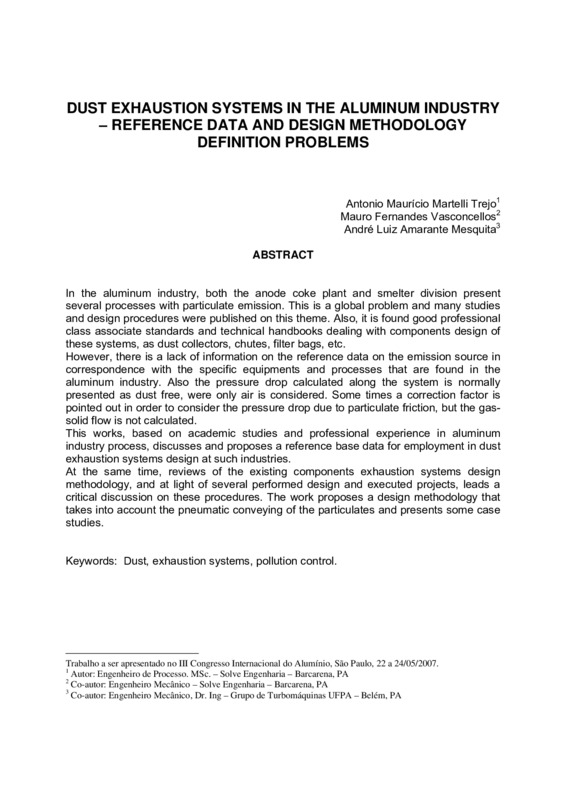
In the aluminum industry, both the anode coke plant and smelter division present several processes with particulate emission. This is a global problem and many studies and design procedures were published on this theme. Also, it is found good professional class associate standards and technical handbooks dealing with components design of these systems, as dust collectors, chutes, filter bags, etc. However, there is a lack of information on the reference data on the emission source in correspondence with the specific equipments and processes that are found in the aluminum industry. Also the pressure drop calculated along the system is normally presented as dust free, were only air is considered. Some times a correction factor is pointed out in order to consider the pressure drop due to particulate friction, but the gassolid flow is not calculated. This works, based on academic studies and professional experience in aluminum industry process, discusses and proposes a reference base data for employment in dust exhaustion systems design at such industries. At the same time, reviews of the existing components exhaustion systems design methodology, and at light of several performed design and executed projects, leads a critical discussion on these procedures. The work proposes a design methodology that takes into account the pneumatic conveying of the particulates and presents some case studies.
-
Abstract
-
In the aluminum industry, both the anode coke plant and smelter division present several processes with particulate emission. This is a global problem and many studies and design procedures were published on this theme. Also, it is found good professional class associate standards and technical handbooks dealing with components design of these systems, as dust collectors, chutes, filter bags, etc. However, there is a lack of information on the reference data on the emission source in correspondence with the specific equipments and processes that are found in the aluminum industry. Also the pressure drop calculated along the system is normally presented as dust free, were only air is considered. Some times a correction factor is pointed out in order to consider the pressure drop due to particulate friction, but the gassolid flow is not calculated. This works, based on academic studies and professional experience in aluminum industry process, discusses and proposes a reference base data for employment in dust exhaustion systems design at such industries. At the same time, reviews of the existing components exhaustion systems design methodology, and at light of several performed design and executed projects, leads a critical discussion on these procedures. The work proposes a design methodology that takes into account the pneumatic conveying of the particulates and presents some case studies.
-
Língua do arquivo
-
inglês
-
Data da Publicação
-
Ano Desconhecido
-
Autores
-
Antonio Mauricio Martelli Trejo Mauro Fernandes Vasconcellos Andre Luiz Amarante Mesquita
-
Local
-
UFPA - Sao Paulo/2007